This EV enthusiast is taking it home today. While I'm a bit sad to see it go, I'm starting to think about what I'll do next. After hearing something rattling in the motor we found one of the spring clips for a brush had fallen into the armature. After we pulled it out, the rattling stopped but the brushes may need to be replaced. The armature looked ok, which is good news.
He plans use it as a daily driver. His commute is 25 miles each way and he can plug in at work, which is a good fit for the range of the car.
My son and his friend loaded the old seized engine from the del Sol into the back of our wagon along with some parts that I couldn't sell on craigslist like the alternator, starter and power steering pump. We got $12.06 for the parts as scrap iron.
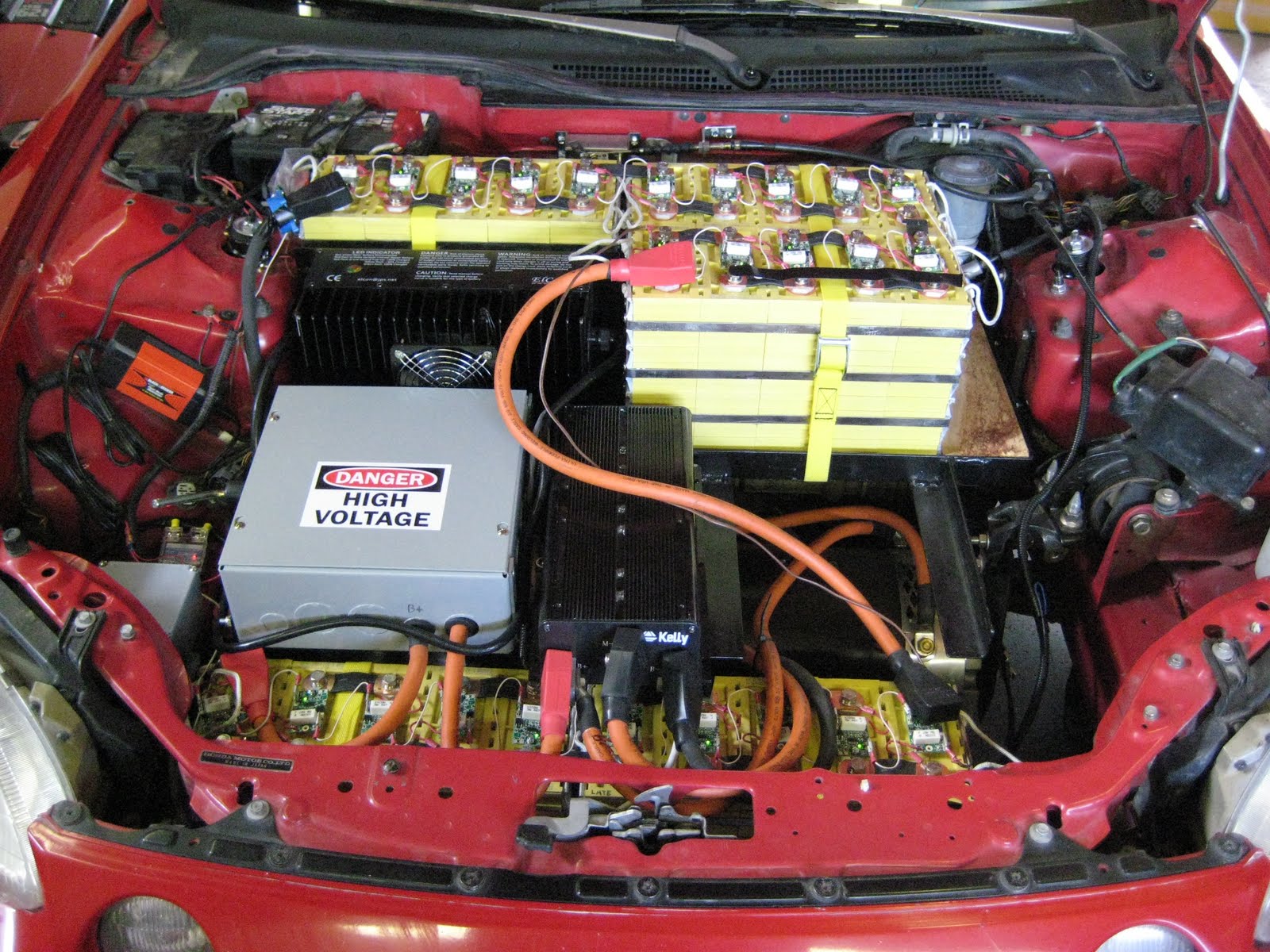
This DEA RM4, with built in circulating pump and thermostat, was on ebay. Since it won't be needed until this fall I'll wait until then to install it. It should fit right on the firewall. I've also included a couple of current pictures of under the hood and in the trunk.
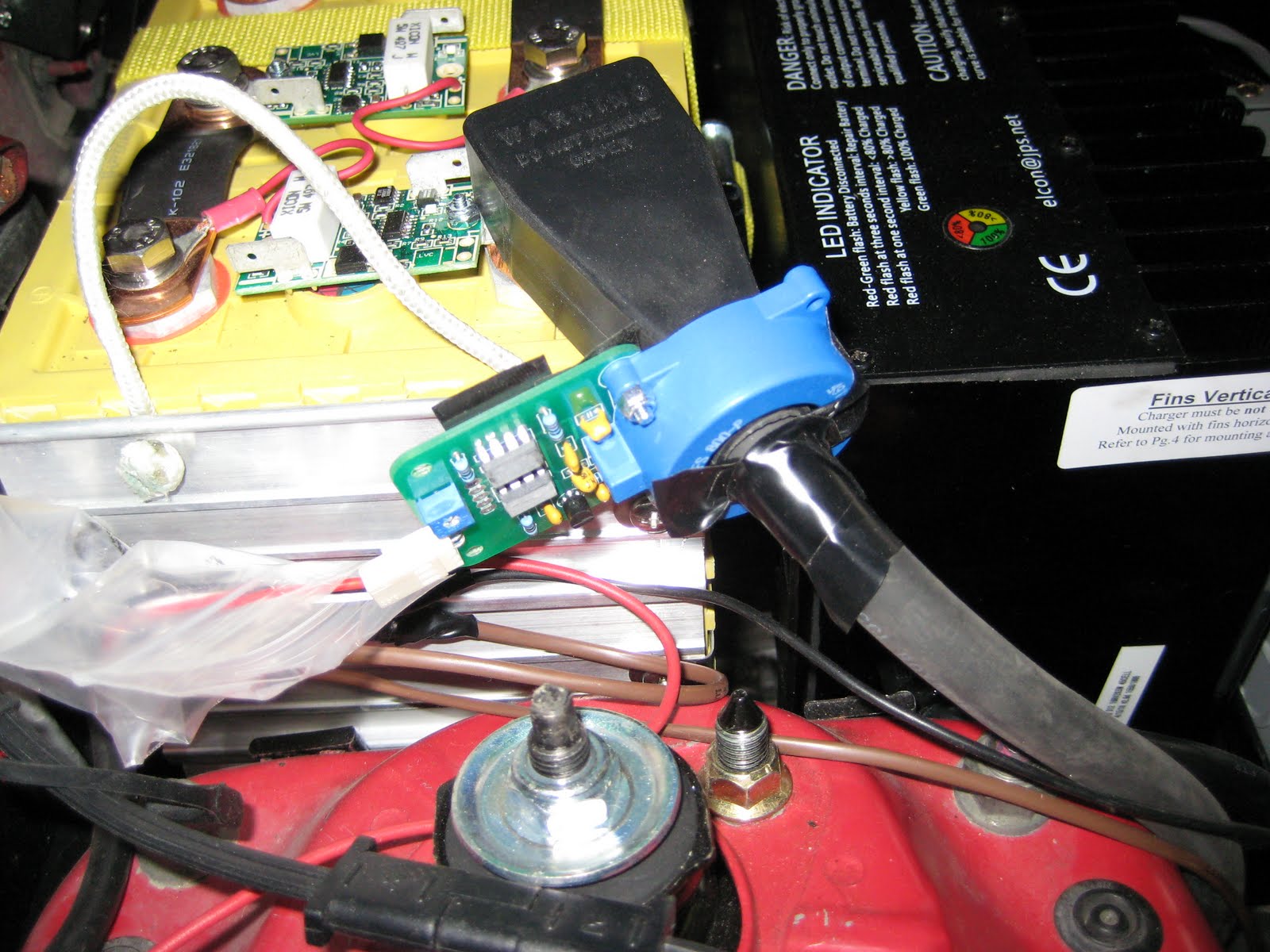
The MiniBMS has a simple single wire control for both HVC (high voltage cutoff) and LVC (low voltage cutoff). Basically, if the keyed input (12v) is off and any cell goes to too high (from charging) the end board cuts off the charger (through an AC relay). Then if the keyed input is on (driving) and any cell goes too low a buzzer sounds and ya gotta pull over. The end board can also be wired to cut the throttle in half. This is the BMS end board in a plastic box and the charger relay, not the neatest but pretty good considering all the things right there.
The tests for the buzzer and charger shut off went great. Now the only thing left on this EV is a vacuum pump, which really isn't needed because the disc brakes work really well. Here is the area with the lids on both the BMS and main control box.
EV Works downunder makes a Fuel Gauge Driver for the original dashboard fuel gauge. The hardest part of the install was pulling the wire back to the fuel gauge sender. I used thermostate wire from home depot, 18/2, which has a double insulation. Once the wire was pulled and connected to the FGD I turned on the ignition switch and the gauge came up really slowly. As you can see it still needs a protective enclosure. Now the tach, speedo, temp and fuel gauges all work. I'll connect the BMS next and try to hook it to the OIL light, through the oil pressure sender.
I'll have to drive it and tune it, but at least for now it says I have gas in the tank. :)
The MiniBMS boards arrived and all of them are installed with a green led on. The boards went on pretty easy, except I had to remount the controller and the heat gauge sender to leave some room for the boards.
Notice, the one board could be pushed sideways to make room for a cable, nice.
This is a conversion project of a 1993 Honda del Sol to a 144V electric vehicle. This EV is expected to have a maximum speed of 85 MPH and a sustainable speed of 55-65 MPH. Its range should be 60 miles. The onboard chargers can be plugged in to any 110 outlet and charge up the batteries overnight. Currently the total budget including the donor vehicle is $13,500.
'88 Honda Civic Wagon
My first conversion was an '88 Honda civic wagon converted to a 72v system, with a max speed of 45 mph, a range of 18 miles for about $4000